The Hold Order Nobody Signed: Barbiturate Continuity in U.S. Nursing Homes

Photo: nurse reviewing medication administration record cart in U.S. nursing home, via wallpapers.com
A medication administration record is a ledger of what happened, not always of what was decided. In Room 12, a scheduled phenobarbital dose is marked 'held—no supply.' The entry is brief, the variance is closed, and the next shift inherits a resident whose chronic barbiturate exposure has been interrupted for reasons that may have nothing to do with clinical intent. For most drug classes, that gap is a logistics problem. For barbiturates, it can be the opening move in a withdrawal syndrome that nursing-home systems are not built to see.
The clinical weight of a routine hold
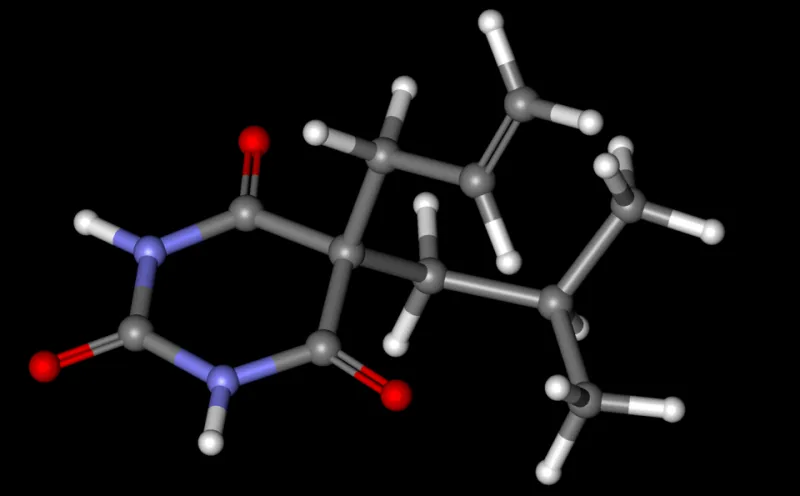
Barbiturates are not interchangeable with other sedatives when continuity is at stake. Residents on chronic phenobarbital or butalbital-containing therapy may have physiologic dependence, and an abrupt reduction—whether from an unexplained hold, a refill delay, a prior-authorization stall, or a pharmacy substitution—can precipitate tremor, agitation, autonomic instability, and seizures. The risk is not limited to high doses. It is concentrated in patients whose regimen has been stable for months or years and whose care plan treats the drug as background noise.
This is where harm reduction and clinical ethics meet. A facility does not need to endorse long-term barbiturate use to accept that unplanned discontinuation is a safety event. Stewardship and continuity are not opposites. The ethical failure is not that a clinician eventually decides to taper; it is that a taper happens by omission, without a prescriber’s signed reasoning, without a pharmacist’s review, and without a monitoring plan.
How the paper trail hides the decision
Nursing-home medication systems are optimized to catch wrong drug, wrong dose, and wrong time. They are less reliable at catching 'right drug, stopped for an unrecorded reason.' MAR codes such as held, unavailable, refused, and NPO are administrative categories, not clinical diagnoses. A hold may reflect a valid prescriber order, a drug interaction, a swallowing problem, or a supply failure. When those possibilities collapse into one code, the record stops distinguishing between a thoughtful pause and an accidental withdrawal.
Consultant-pharmacist reviews can compound the blind spot. Many reviews are structured around potentially inappropriate medications in older adults, and a barbiturate may be flagged for reduction without a corresponding flag for withdrawal risk. The pharmacist’s recommendation may be clinically sound, but if the implementation path is a MAR hold rather than a documented taper, the facility has converted a review into an uncontrolled experiment.
Pharmacy substitution is another quiet pressure point. Generic-to-brand switches, changes in salt form, and reformulations can alter absorption or bioavailability. In a resident with chronic exposure, a substitution that looks therapeutically equivalent on paper may produce either excess sedation or early withdrawal. The MAR records the new product; it rarely records the clinical question that should accompany it.
A facility audit for barbiturate continuity
The first step is to stop treating barbiturate holds as ordinary MAR variances. A facility-level audit can be simple, monthly, and targeted. It should begin with a list of every resident receiving a barbiturate or barbiturate-containing product, then ask a narrow set of questions:
- Was any scheduled dose held, delayed, or omitted in the past 30 days? For what documented reason?
- Was the prescriber notified before the second consecutive missed dose?
- Did a pharmacist review the interruption for withdrawal risk, interaction risk, and formulation change?
- Is there a signed taper plan if the drug is being reduced, or a continuation plan if it is not?
- Does the care plan name the signs of withdrawal and the escalation pathway?
- Were certified nursing assistants, licensed nurses, and on-call providers briefed on the resident’s risk?
The audit should not stop at the individual resident. It should sample pharmacy delivery logs, prior-authorization queues, and after-hours supply arrangements. If the same pharmacy repeatedly leaves barbiturates out of weekend deliveries, the problem is not Room 12. It is the contract.
An escalation checklist that treats discontinuation as a safety event
A workable checklist fits on one page and follows the medication, not the shift. When a barbiturate dose is held or unavailable, the nurse should document the reason and notify the prescriber within a defined window—before the next scheduled dose, not after a seizure. The pharmacist should screen for withdrawal risk and recommend a bridging supply or a structured taper. The prescriber should attest to the plan in the record: continue, bridge, or taper. If the plan is to taper, the order should specify rate, monitoring, and rescue thresholds. If the plan is to continue, the facility should correct the supply problem and document the correction.
The checklist should also include a 'no silent substitution' rule. Any change in manufacturer, formulation, or salt form should trigger a pharmacist review and a short monitoring note, especially for residents with cognitive impairment who cannot report early symptoms.
The variance that should never close quietly
The ethical center of this issue is not whether barbiturates are good or bad. It is whether a nursing home can tell the difference between a clinical decision and an administrative accident. In 2026, with electronic MARs, consultant-pharmacist platforms, and surveyor dashboards, facilities have more data than ever. What they often lack is a rule that says: a barbiturate hold is a clinical event until a clinician signs it.
Room 12 is not a metaphor. It is a room where a resident may be one missed dose away from a preventable withdrawal seizure. The hold order should have a signature, a reason, and a plan. If it does not, the variance is not closed. It is a sentinel event waiting for the next shift.